

Blog
Annual Penn State Outreach “Strategies: Educational Excellence for Health Care Providers and Educators” Conference
Latest News
December 10, 2025
September 10, 2025

Latest News
December 10, 2025
- Careers in Motion: Taking Technical Education on the Road
September 10, 2025
- VRSim Newsletter September 2025
We were honored to present at the 34th Annual Penn State Outreach “Strategies: Educational Excellence for Health Care Providers and Educators” Conference, an event focused on advancing teaching and learning across health care and senior care settings. The conference brought together educators, clinicians, and innovators to explore practical approaches for improving educational outcomes, with immersive technology playing an important role in those discussions.
Strengthening Patient Care Training with Virtual Reality
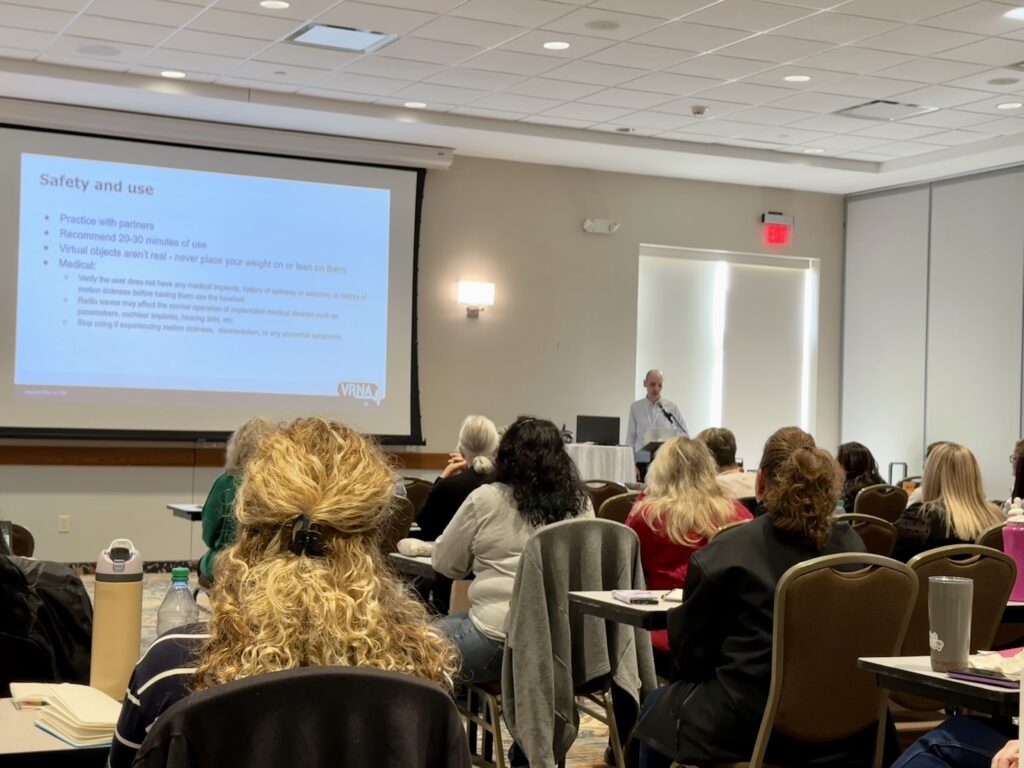
David Zboray, COO and Operations Manager of VRSim, led two breakout sessions centered on enhancing patient care training through virtual reality. His presentation highlighted how immersive learning environments support foundational skill development through interactive modules, real-time feedback, and progress tracking.
By allowing learners to practice clinical scenarios in a safe and repeatable setting, virtual reality helps improve engagement, build confidence, and better prepare students for real-world responsibilities. These capabilities are especially valuable in health care education, where hands-on experience and consistency are essential for job readiness.
First-Hand Impact from the Classroom
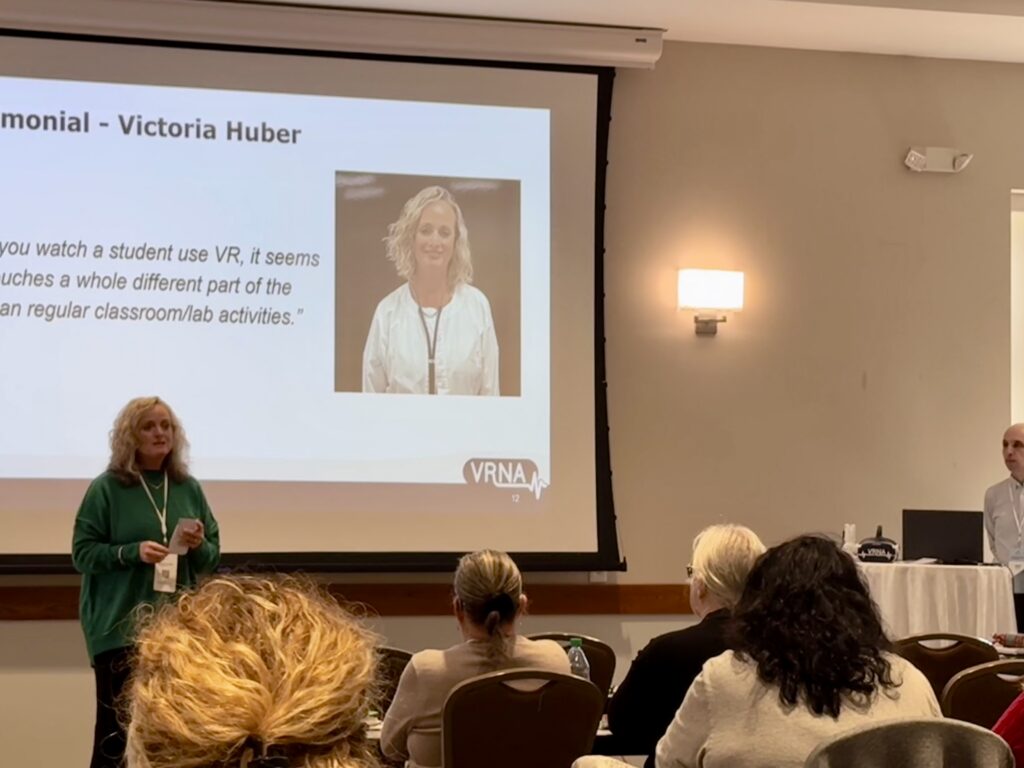
VRSim subject matter expert and consultant Victoria Huber joined the session to share her direct experience using VRNA® in patient care education. She discussed how immersive simulations have improved her students’ skills proficiency and readiness for clinical practice, reinforcing the value of virtual reality as a complement to traditional teaching methods.
Her insights demonstrated how technology-enhanced learning can help bridge the gap between theory and practice while giving students the opportunity to learn, reflect, and grow before entering live clinical environments.
A Vision for Compassionate, Person-Centered Dementia Care
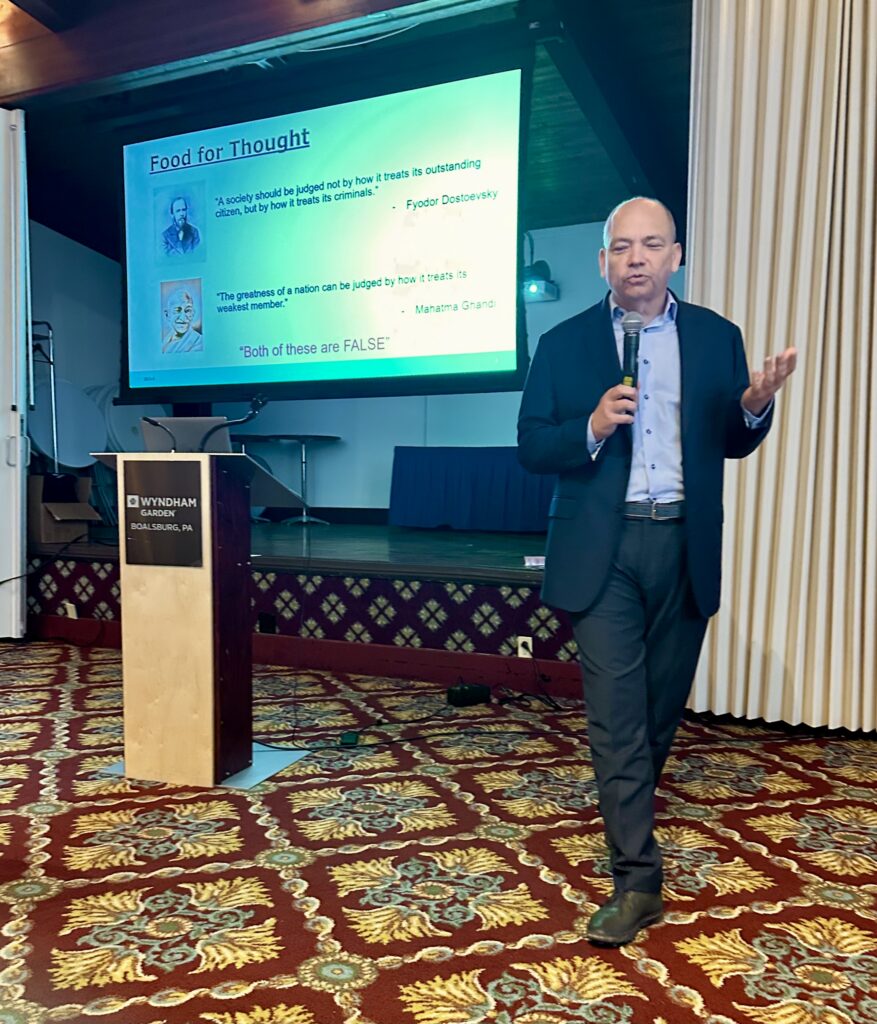
The conference keynote was delivered by Matthew Wallace, CEO and President of VRSim. His presentation explored how emerging technologies can support compassionate, person-centered dementia care while preserving dignity, communication, and human connection.
Matthew discussed practical and ethical ways to integrate virtual reality, artificial intelligence, and smart technologies into senior care environments. The focus remained clear: technology should enhance empathy, understanding, and quality of life while supporting, not replacing, the human elements that define quality care.
Looking Ahead
VRSim’s participation in the Penn State Outreach Strategies Conference reinforced the growing role immersive technology plays in shaping the future of health care education and senior care. We remain committed to working alongside educators and care providers to deliver innovative, evidence-based solutions that strengthen skills, support compassion, and improve outcomes for patients and residents.
To learn more about how VRSim is transforming health care education, visit www.vrna.net.